
Does Thicker Copper Wire Make a Drone Motor More Powerful?
Not necessarily. With the same wire length and other conditions, thicker enameled copper wire reduces winding resistance and copper loss. However, it takes up more stator slot space, limiting the number of winding turns. So, how does copper wire diameter in drone motors affect efficiency, temperature rise, and output performance?
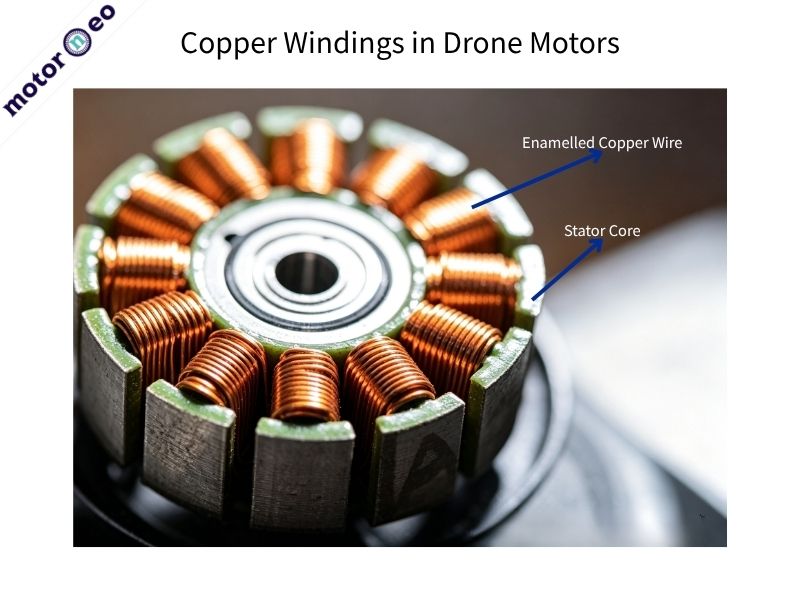
What Does Copper Wire Do in a Drone Motor
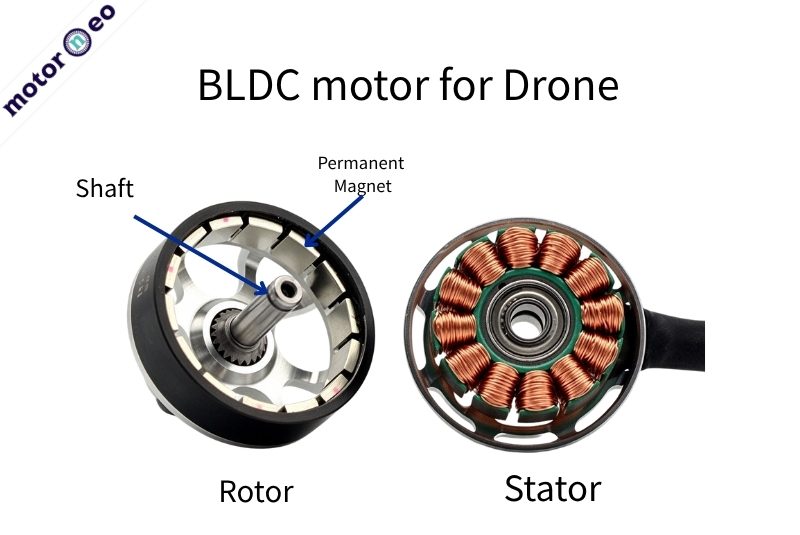
Most multirotor drones use brushless motors. Insulated copper wire wraps around the stator teeth. When current flows through the windings, they generate a magnetic field that interacts with the rotor’s permanent magnets, driving the propeller.
A thin enamel insulation layer covers the copper wire, preventing short circuits between adjacent wires.
Three key parameters matter when designing motor windings:
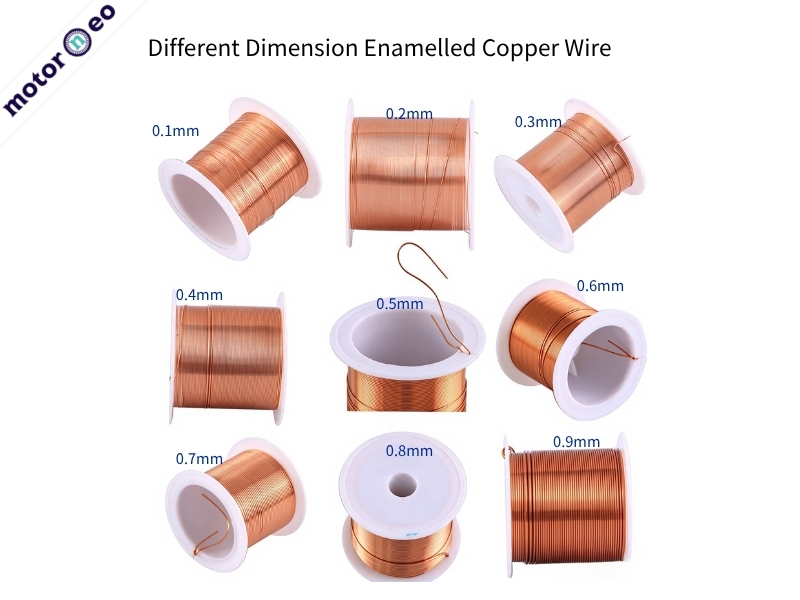
•Wire Diameter: The diameter of the copper conductor, which affects resistance and space requirements.
•Number of Turns: The number of times the wire wraps around a stator tooth, affecting back EMF and torque constant.
•Number of Parallel Strands: Multiple wires wound in parallel increase the total conductive cross-sectional area.
These parameters are interdependent. You cannot optimize one without considering the others.
Does Thicker Copper Wire Reduce Motor Copper Loss?
Yes, provided the wire material, length, temperature, and current remain the same.
Thicker copper wire has a larger conductive cross-sectional area and lower resistance. We can calculate winding copper loss using this formula:
Copper Loss: P = I²R
Here, I represents the current, and R represents the winding resistance.
For example, let’s compare two round copper wires of equal length:
| Bare Copper Wire Diameter | Conductive Cross-Sectional Area | Approx. Resistance per Meter at 20°C |
| 0.40 mm | 0.126 mm² | 0.137 Ω |
| 0.50 mm | 0.196 mm² | 0.088 Ω |
Assume both wires carry 10 A of DC current at 20°C. The theoretical resistive losses are approximately 13.7 W and 8.8 W per meter, respectively.
Under these conditions, the 0.50 mm wire produces approximately 36% less resistive loss.
However, this is only a theoretical comparison of equal-length wires. Using thicker wire does not necessarily reduce the entire motor’s copper loss by 36%.
Why Can’t We Keep Increasing Copper Wire Diameter?
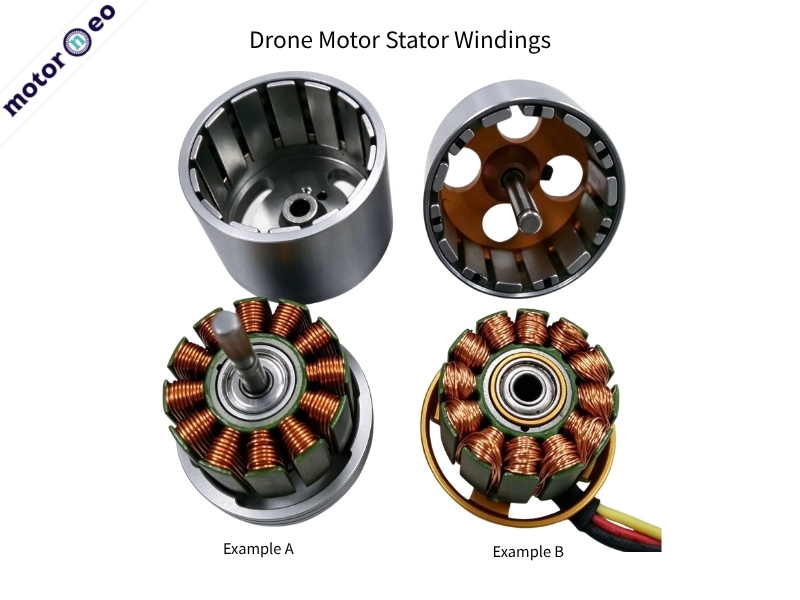
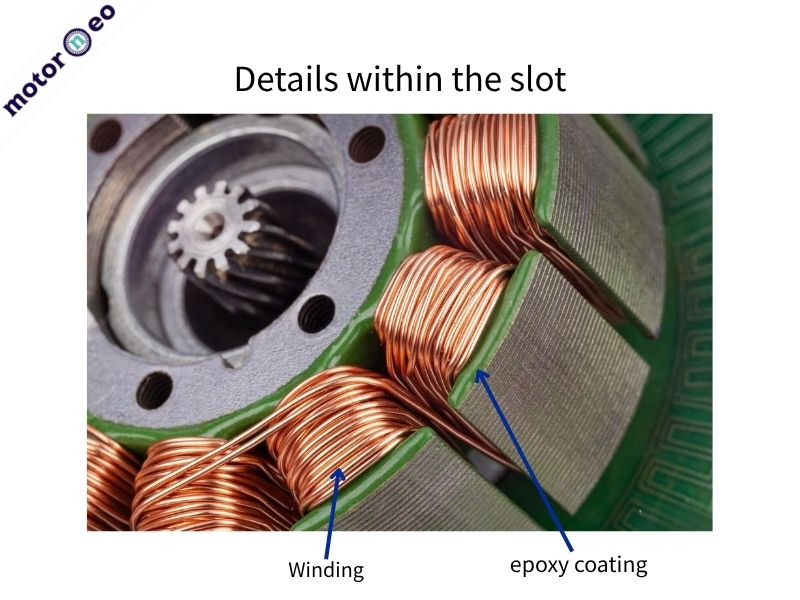
The main limitation when increasing copper wire diameter in drone motors is the available stator slot space.
Think of a stator slot as a box with limited space. Thicker wires take up more room, so the original number of turns may no longer fit.
For example, 0.50 mm copper wire has approximately 56% more conductive cross-sectional area than 0.40 mm wire. Simply increasing the wire diameter without changing the stator design may make the windings impossible to fit.
There are two possible options:
•Reduce the Number of Turns: This can lower winding resistance if other design conditions remain largely unchanged. However, it typically increases the KV rating and reduces the torque constant. Therefore, the battery voltage and propeller load must be matched accordingly.
•Use Multiple Parallel Strands: Several thinner wires can provide the required total conductive cross-sectional area. This also offers more flexibility when arranging wires inside the stator slots. However, insulation requirements and available slot space still limit the design.
Therefore, thicker wire does not always improve overall motor efficiency. You must also consider motor speed, current, and propeller load.
Why Does Slot Fill Factor Matter?
Since stator slot space is limited, how can we determine how much copper wire will fit? This is where slot fill factor comes in.
Slot fill factor typically refers to the ratio of the total bare copper conductor cross-sectional area to the stator slot area.
A higher slot fill factor means more copper occupies the available slot space. However, the slots must also accommodate enamel insulation, slot insulation, and necessary assembly clearances.
Therefore, a higher slot fill factor is not always better. Excessive filling can make winding more difficult and may even damage the wire’s enamel insulation.
For small drone motors, stator slot geometry, tooth width, and winding methods directly affect the achievable slot fill factor.
How Should Wire Diameter Be Selected for Different Drones?
Wire diameter must match the overall motor design and flight requirements.
| Application | Key Winding Design Considerations |
| FPV Racing Drones | Copper loss and temperature rise at high speeds and currents |
| Aerial Photography Drones | Efficiency and noise during typical hovering conditions |
| Agricultural or Heavy-Lift Drones | Continuous torque, thermal management, and long-term operating reliability |
When selecting wire diameter, first determine the battery voltage, target speed, propeller load, and continuous current. Then optimize wire diameter, winding turns, and stator slot geometry together.
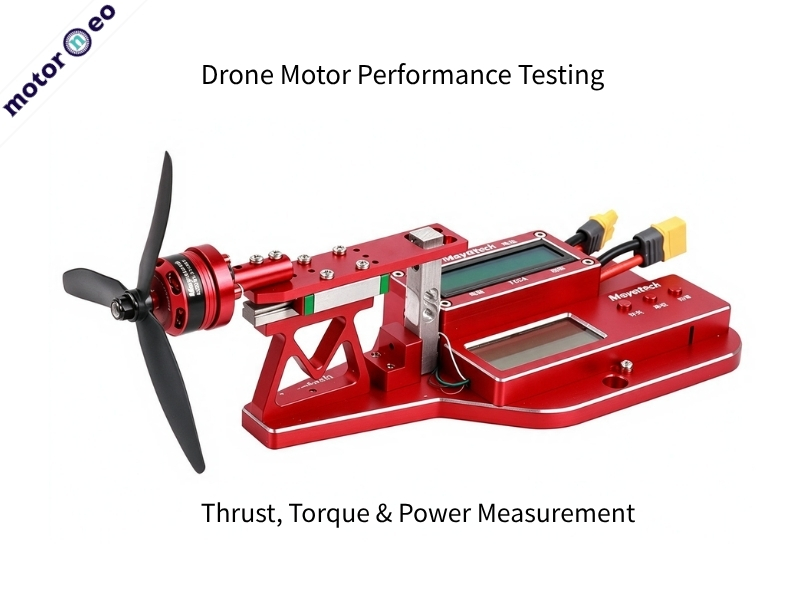
Finally, verify the design through winding resistance measurements, temperature rise tests, and motor dynamometer testing.
Thicker Copper Wire or Better Winding Design?
Copper wire diameter affects more than resistance. It also influences winding turns, slot fill factor, and manufacturing feasibility.
An efficient drone motor does not simply use the thickest copper wire. Instead, its windings must match the motor speed and actual load within the limited stator space.
If a drone motor overheats during sustained flight, would you use thicker wire or first review its winding turns and operating current?