
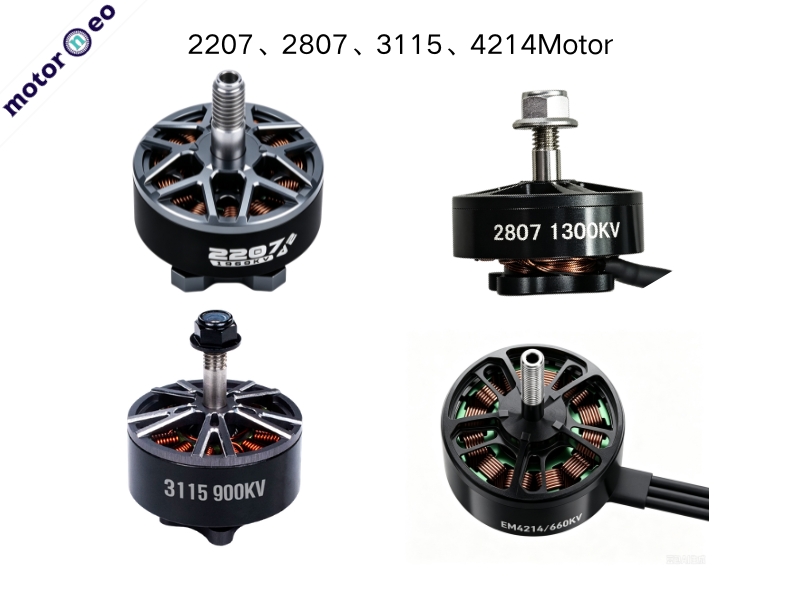
Drone motor model numbers such as 2207, 2807, 3115, and 4214 are often mistaken for power ratings. But does a larger number really mean a more powerful motor?
In fact, these codes mainly describe stator core dimensions and indicate a general size class. They do not directly define torque, efficiency, temperature rise, or propeller compatibility. Proper evaluation also requires KV, slot-pole design, winding, electrical steel, and actual load.
What do 2207, 2807, 3115, and 4214 mean?
Many outrunner brushless motors use a four-digit code to indicate the stator size.
The common interpretation is:
- First two digits: stator outer diameter.
- Last two digits: stator stack height.
- Unit: usually millimeters.
| Motor Model | Common Size Meaning |
| 2207 | Stator outer diameter: about 22 mm; stack height: about 7 mm |
| 2807 | Stator outer diameter: about 28 mm; stack height: about 7 mm |
| 3115 | Stator outer diameter: about 31 mm; stack height: about 15 mm |
| 4214 | Stator outer diameter: about 42 mm; stack height: about 14 mm |
These drone motor model numbers indicate stator size, not complete motor dimensions or performance.
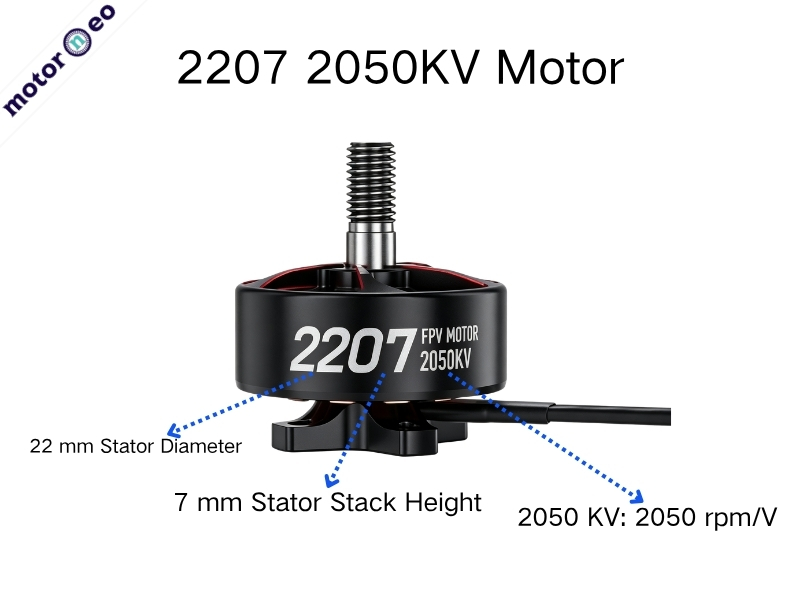
The “stator outer diameter” is not the overall motor diameter. Windings, magnets, the rotor bell, and the housing surround the stator. Therefore, the complete motor is usually larger.
Take the V3115 as an example. Its 31 × 15 mm code refers to stator dimensions, not motor power. The same stator size can use different KV ratings for different voltages, propellers, and loads.
These numbers represent size classes, not universal motor standards. Some manufacturers also use decimal codes or add series names. Always confirm the CAD drawings and complete dimensions before ordering.
How do stator diameter and stack height affect performance?
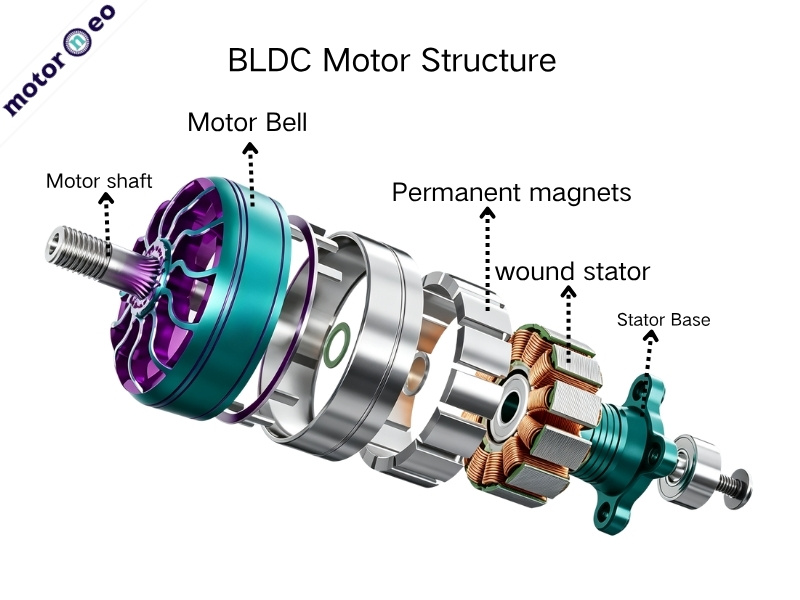
The stator acts as the motor’s “power-producing frame.”When energized, the windings create a rotating magnetic field.
This field interacts with the rotor magnets and turns the propeller. The stator diameter and stack height determine the magnetic path, winding space, and effective working area.
Larger Stator Diameter Usually Increases Torque
When the stator diameter increases, the electromagnetic force acts farther from the shaft center.
Like a longer wrench on a bolt, this generally helps produce more torque.
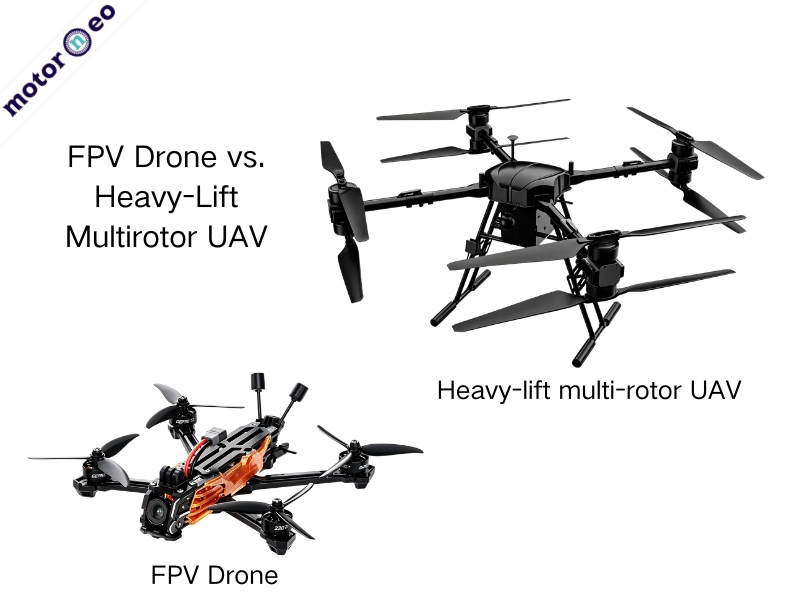
Therefore, heavy-lift drones with large propellers often use larger-diameter, lower-KV outrunner motors.
These motors drive larger propellers at stable speeds.
However, a larger diameter also increases rotor size, magnet usage, and rotational inertia.
The motor may deliver more torque but respond less quickly than a small high-speed motor.
Greater Stack Height Increases Core Length
Stack height is the axial height of the stacked electrical steel laminations.
A taller stack usually increases effective core length and winding space.
It can raise output potential, but also increase weight, copper loss, and cooling demands.
For example, 2207 and 2212 motors have similar stator diameters.
The 2212 has a taller stack and usually accommodates more core material and windings.
However, it is also heavier.
Common size characteristics include:
- Small diameter and low stack height: lightweight with quick response.
- Large diameter and low stack height: flatter profile with a larger torque radius.
- Small diameter and high stack height: slender profile with greater effective core length.
- Large diameter and high stack height: greater output potential, but higher weight and inertia.
Therefore, bigger is not always better.
Choose the size based on drone payload, propeller, installation space, and flight mission.
Different FPV applications also place different requirements on motor speed, torque, efficiency, and response.
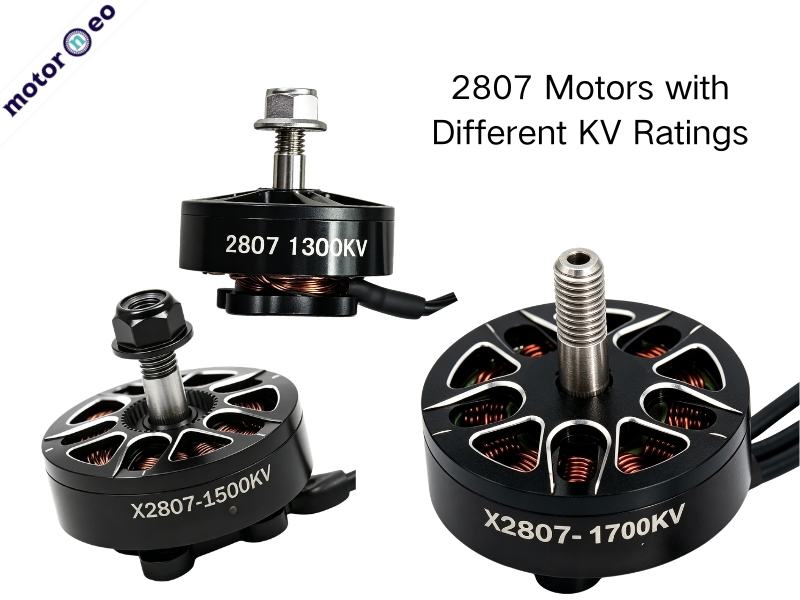
Why is KV alone not enough?
KV is the speed constant, measured in rpm/V.
Under ideal no-load conditions, each 1 V increase raises theoretical speed by approximately the KV value.
For example, a 1000 KV motor reaches about 10,000 rpm at 10 V under no load.
However, KV does not indicate power or directly represent loaded torque.
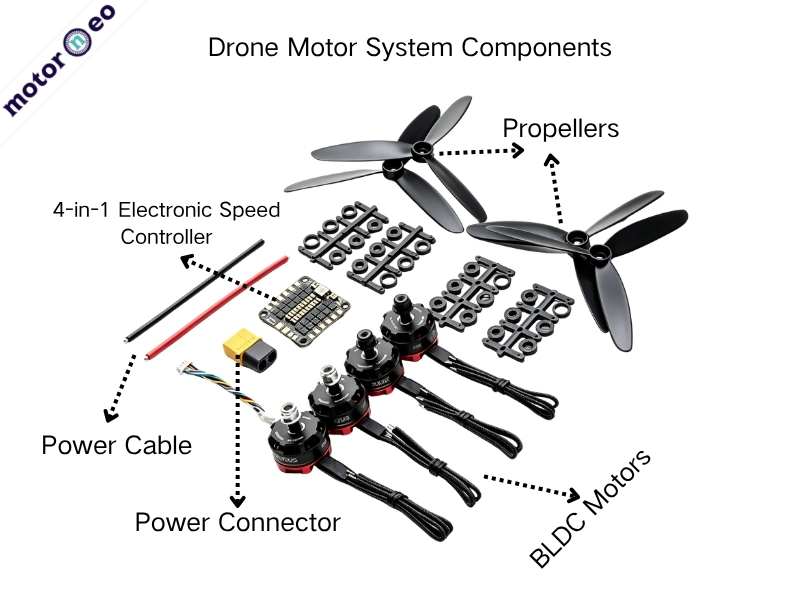
After installing a propeller, actual motor speed and output also depend on:
- Battery voltage.
- Propeller diameter and pitch.
- ESC current limit.
- Winding resistance and allowable continuous current.
- Load and cooling conditions.
A high-KV motor can reach higher speeds more easily.However, an oversized propeller may cause the current to rise rapidly.
This can overheat the windings, overload the ESC, or even damage the permanent magnets.Low-KV motors usually suit higher voltages and larger propellers.
However, they do not always produce more torque under every operating condition.
The same 31 × 15 mm stator can support several KV ratings.Designers can change the turns, wire diameter, and winding connection.
When selecting a motor, check at least:
- Stator size.
- KV rating and operating voltage.
- Propeller size.
- Maximum current, continuous power, and cooling conditions.
Judging a motor only by KV is like knowing engine speed without displacement, torque, or vehicle weight.This makes real-world performance difficult to assess.
Why can motors with the same model perform differently?
Two motors may both carry the 2207 label, yet one accelerates faster while the other offers longer flight time.The reason often lies in their internal designs.
Slot-pole design affects magnetic interaction.
Slot count refers to the number of stator slots that hold the windings.Pole count refers to the magnetic poles formed by the rotor magnets.
The common 12-slot, 14-pole configuration is only one possible combination.Slot-pole combinations affect torque ripple, starting performance, operating smoothness, and electrical frequency.
Different combinations serve different design goals.More slots or poles do not necessarily mean better performance.
Windings Affect KV, Current, and Heat
Even with the same stator core, changing turns, wire diameter, or connection affects KV, resistance, current, and temperature rise. Common trends include:
- More turns: KV generally decreases.
- Fewer turns: KV generally increases.
- Thicker wire: lower resistance, but greater slot space usage.
- Thinner wire: allows more turns, but current capacity requires reassessment.
A higher slot fill factor is not always better. Overpacking the slots makes winding more difficult. It may damage the magnet wire insulation and hinder varnish impregnation and heat dissipation.
Electrical steel affects core loss and temperature.
Common electrical steel thicknesses for drone motors include 0.20 mm and 0.35 mm, while 0.25 mm is also available for some designs. Projects with stricter high-frequency loss targets may consider 0.15 mm laminations.
Thinner electrical steel laminations usually help reduce eddy-current loss, but they also impose additional requirements:
- Higher material and tooling costs.
- Thin laminations deform more easily.
- Burr height, flatness, and stacking consistency become harder to control.
Even at 0.20 mm, different material grades may have different core losses and magnetic properties.
Therefore, specifying only “0.20 mm electrical steel” is insufficient.
Confirm performance based on operating frequency, flux density, and temperature-rise requirements.
ESC PWM switching frequency can also affect high-frequency core loss by introducing additional current and magnetic flux ripple.
Slot shape and accuracy affect performance.
The stator bore diameter, tooth width, slot opening, and slot area affect both the magnetic circuit and winding space:
- Wider slot opening: simplifies winding but may alter the air-gap magnetic field.
- Teeth that are too narrow: may cause excessive local flux density.
- Insufficient slot area: cannot accommodate the required wire diameter and number of turns.
Manufacturing errors also directly affect reliability. Excessive burrs may damage insulation or cause interlaminar short circuits. Uneven stack height affects assembly. Excessive bore deviation may create an uneven air gap.
Therefore, identical model numbers only indicate that some dimensions are similar. Performance depends on slot-pole design, winding, materials, and manufacturing quality.
What should be confirmed for existing tooling or custom stators?
Matching drone motor model numbers does not guarantee tooling compatibility. A request for a “2207 or 2807 stator” is not enough, because the bore diameter, slot opening, or slot shape may differ. These differences can affect the rotor bell, magnets, and winding design.
Core dimensions
- Outer diameter, inner diameter, and stack height.
- Slot count, tooth width, slot pitch, and slot shape.
Material and process
- Lamination thickness, material grade, and magnetic requirements.
- Surface insulation, stacking method, burr height, and key tolerances.
Winding, insulation, and testing
- Wire diameter, turns, connection, and phase resistance.
- Slot insulation, impregnation, dielectric withstand, and insulation resistance.
- Winding end height and overall height.
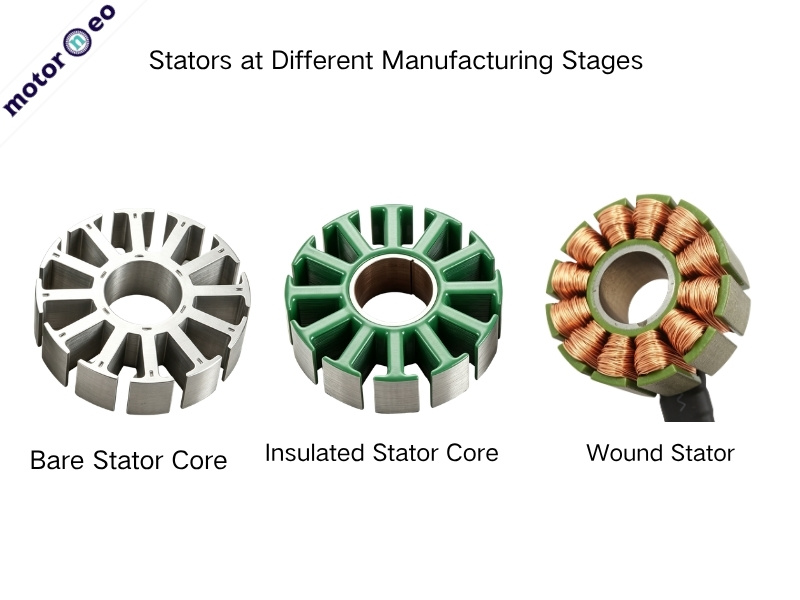
Winding end height is critical in compact outrunner motors. Excessive height may interfere with the rotor bell or mounting structure. Also confirm the delivery scope: loose laminations, a bare core, an insulated core, or a wound stator.
For prototypes, laser cutting or wire EDM can validate the design. After the design and volume are confirmed, stamping can reduce costs and improve consistency.
Motor codes indicate stator size, not power or application. Define the payload, propeller, and voltage first. Then select the KV rating and stator size before checking the internal design, materials, temperature rise, and manufacturing process.
In short, drone motor model numbers provide a useful starting point, but they cannot replace complete drawings and operating requirements.
When comparing two 2807 motors, would you check only KV and peak power—or also examine their internal design and materials?