
Open vs sealed drone motors involve a basic trade-off between cooling and protection. Open motors let air flow directly over the stator and windings. This keeps the structure light and provides direct cooling. Sealed or highly protected motors limit moisture, dust, and particle ingress. However, they also reduce internal airflow and require more housing, sealing, and thermal-management design.
So why do some drones favor open motors, while agricultural and inspection UAV place greater emphasis on protection?
In this article, Sealed / Protected Motor refers to a high-protection design that significantly limits water and contaminant ingress. It typically uses housings, seals, or potting, and does not specifically mean a fully hermetic motor.
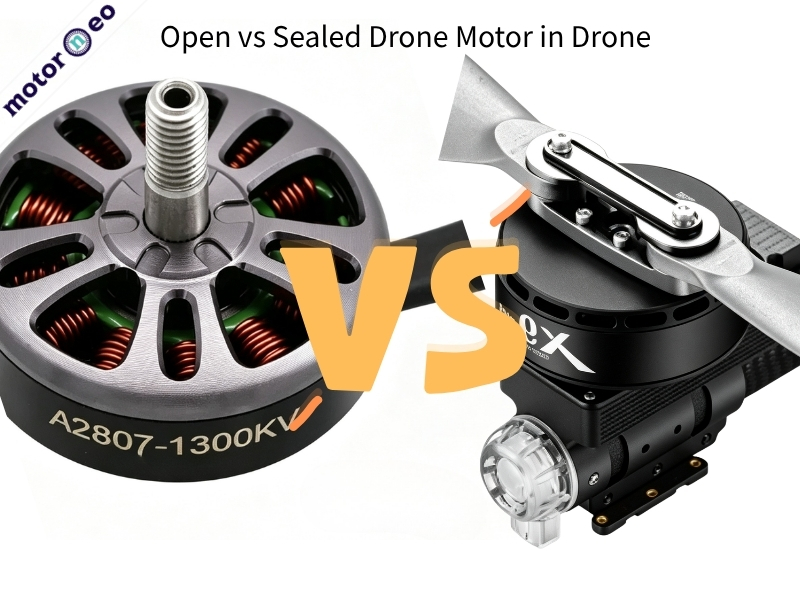
How Do Open and Sealed Motors Differ in Structure?
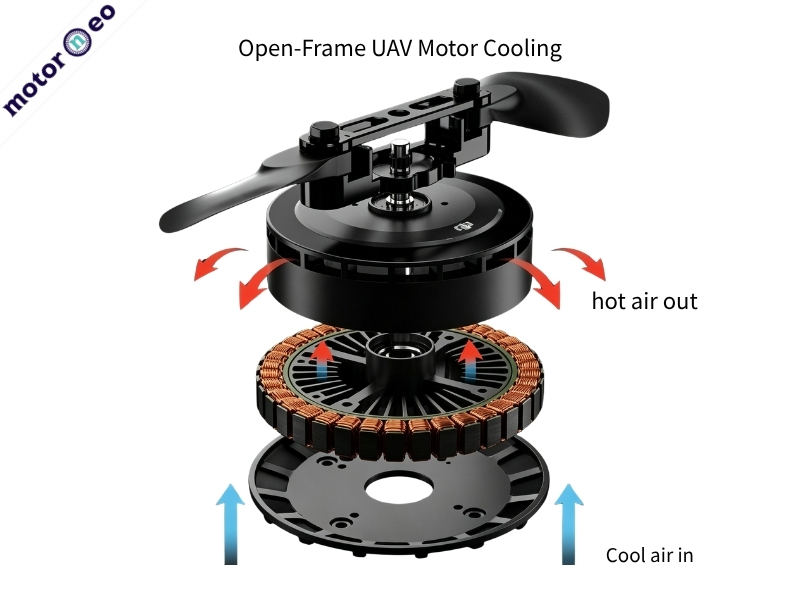
Many drones use outer-rotor brushless motors. Open motors often expose the stator windings directly. Their rotor bells also commonly include ventilation holes. During operation, propeller downwash and forward-flight airflow help remove heat from the windings and core. This design also helps keep motor weight low.
Sealed or highly protected motors use housings, end covers, seals, or potting to reduce contaminant ingress. Heat then travels more through the core and structural parts before reaching the housing. The housing then releases the heat to the surroundings. The main difference lies in how air, contaminants, and heat move through the motor.
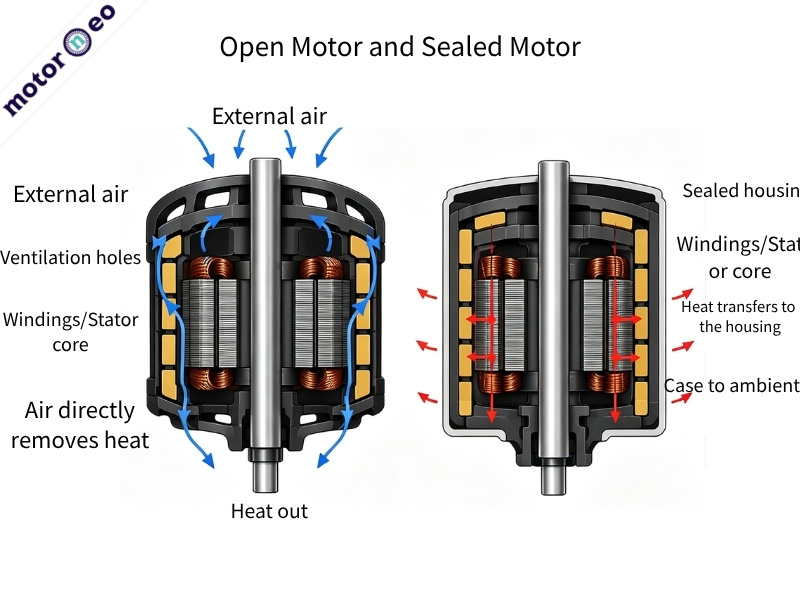
Direct Cooling in Open Motors
During motor operation, copper loss and core loss eventually turn into heat. Open structures let air contact the windings and core directly. During multirotor hovering, the propellers continuously push large volumes of air downward. A well-designed motor can use this airflow for cooling.
This design offers a simple structure, fewer extra parts, lower weight, and a shorter heat path. However, the same openness creates a weakness: air can enter, but so can mist, dust, and particles.
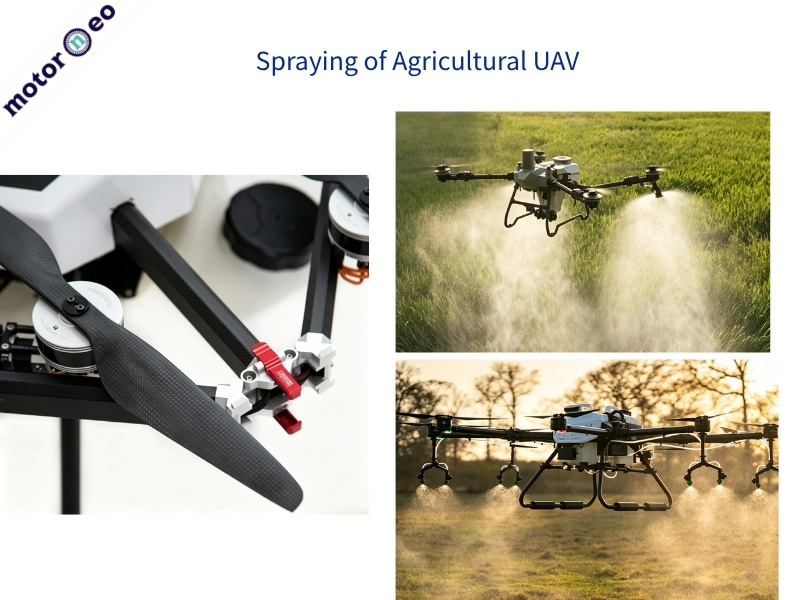
Why Do Agricultural UAVs Require More Motor Protection?
When agricultural drones spray at low altitude, propeller downwash carries mist, spray chemicals, dust, and particles toward the motors. Spreading operations can also generate fertilizer dust. Long-term exposure increases risks of insulation degradation, corrosion, bearing contamination, and internal dust buildup. It can also alter cooling conditions.
These protection requirements already appear in real industrial drones. For example, the DJI Matrice 350 RTK has an IP55 rating. Its operating temperature range is -20°C to 50°C. This does not mean the motors themselves are fully sealed. However, it shows that dust, water, and environmental resistance are defined requirements for inspection and surveying UAVs. As motor protection increases, another question emerges: how does the internal heat escape?
Heat Dissipation in Sealed Motors
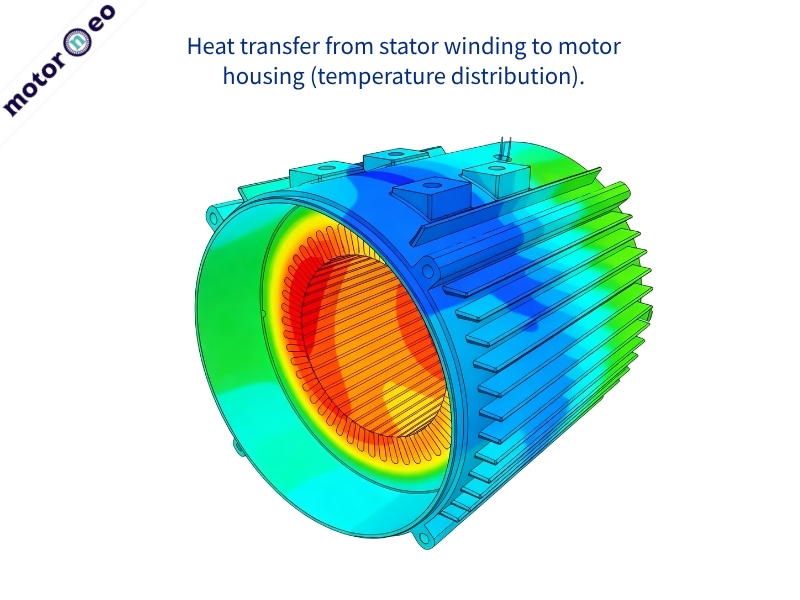
Open motors can use internal airflow to remove heat directly. After sealing, heat relies more on this path:
Windings → Stator Core → Structural Parts → Housing → Ambient Air
Therefore, stator-to-housing contact becomes more important. Core-to-housing thermal resistance also matters more. Potting thermal conductivity, housing material, and heat-dissipation area become more critical as well.
Simply adding a sealed housing to an open motor does not create a reliable industrial UAV motor. The housing blocks water and dust, but it can also make heat harder to remove.
Hovering and Thermal Load
Even while hovering, multirotor drones must continuously generate thrust. Heavy-lift agricultural UAVs show this thermal demand more clearly.
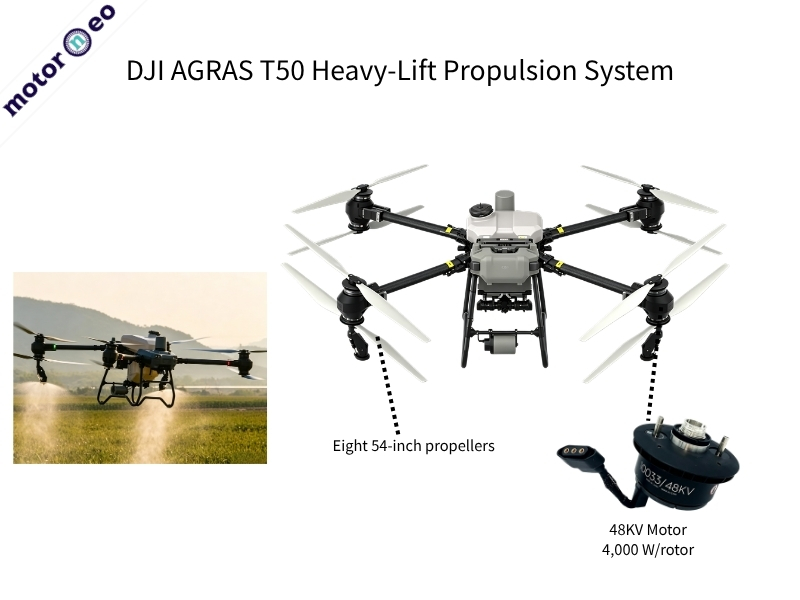
For example, the DJI AGRAS T50 uses eight 54-inch propellers. Its motor specification is 48 KV and 4,000 W per rotor. It supports up to 40 kg for spraying and 50 kg for spreading. During hovering and low-speed operation, the propulsion system must continuously support the aircraft’s weight. Therefore, a few seconds of peak power cannot prove reliable thermal performance. The key is whether continuous copper and core losses can dissipate in time.
The T50 example does not imply that its motors use a specific sealed design. It simply illustrates the sustained thermal load of heavy-lift multirotors during hovering and low-speed operation.
Therefore, short bursts of high power do not represent thermal stability during long-term hovering. As protection increases, the cooling challenge shifts from airflow into the motor to heat transfer out of it.
What Causes the Weight Difference Between Open and Sealed Motors?
Highly protected designs usually add housings, end covers, seals, potting materials, and structural reinforcements. For UAVs, this extra weight adds up.
Therefore, camera-drone and FPV motors more often use open structures for lower weight and direct cooling. Agricultural, inspection, and industrial UAVs may accept extra weight for better environmental protection.
Open vs. Sealed: Key Differences
| Comparison Item | Open Motor | Sealed / Protected Motor |
| Airflow | More direct | More restricted |
| Cooling Path | Relies more on air cooling | Relies more on heat conduction through the core and housing |
| Weight | Usually lower | Usually higher |
| Dust and Water Protection | Weaker | Better |
| Contaminant Risk | Higher | Lower |
| Thermal Management | Relatively straightforward | More complex |
| Typical Applications | Aerial photography, FPV | Agricultural, inspection, and industrial UAVs |
What the two structures truly trade off is the priority given to heat dissipation, protection, and weight.
Why Does This Also Affect Stator Core Design?
A sealed structure does not create additional core loss. However, limited heat paths make existing copper and core losses harder to dissipate.
For high-speed, multi-pole UAV motors, higher electrical frequency can make core loss more significant. For example, Shougang’s 0.20 mm 20SW1200 non-oriented electrical steel has a maximum P1.0/400 core loss of 12.0 W/kg at 1.0 T and 400 Hz. This shows that high-frequency motor core evaluation should consider more than lamination thickness. Designers must also consider material loss, flux density, stack length, and core-to-housing heat transfer.
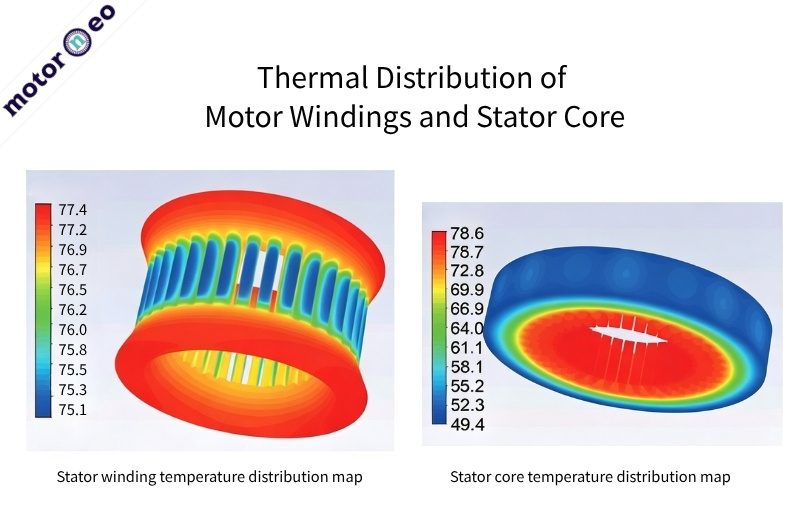
Therefore, industrial UAV thermal management cannot focus on the housing alone. It must also control winding copper loss and core loss. Stator stack length, flux density, and core-to-housing heat transfer also require careful consideration. The choice between open and sealed designs therefore affects the core, windings, and continuous power capability.
Open motors use airflow to achieve direct cooling and lower weight. Sealed or highly protected motors accept extra weight and more complex thermal management. In return, they provide stronger environmental protection.
If a UAV needs long hover time, low weight, and harsh-environment protection, which would you prioritize? Larger airflow paths or more robust environmental protection?