
The stator core is metal, and the winding is a current-carrying conductor. Without reliable insulation between them, the motor may experience short circuits, unstable withstand voltage, or even operational failure.
In actual projects, epoxy coating, overmolding, and slot paper are common insulation solutions for stator cores. Slot paper is inexpensive, so why use epoxy coating? Is overmolding always more stable? How should these options be selected during the prototype stage and mass production stage?
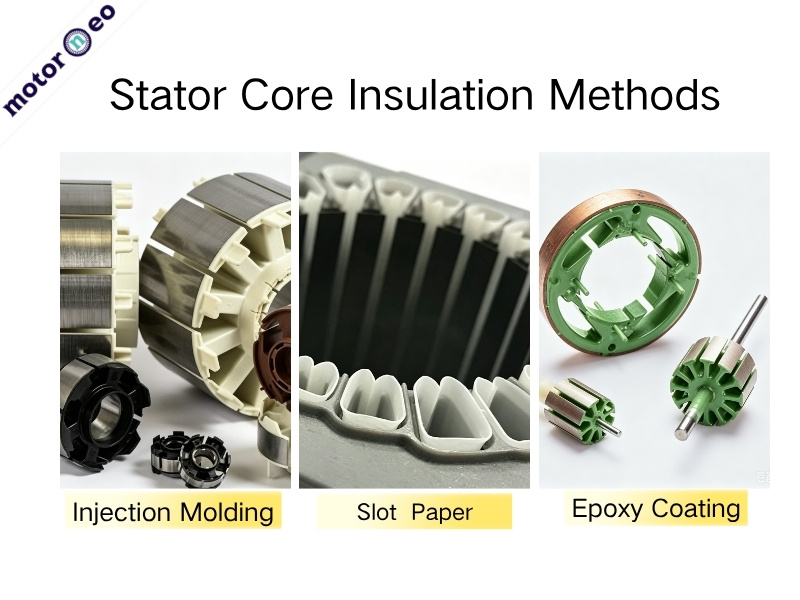
Next, we will compare these solutions from three perspectives: process characteristics, suitable applications, and project stage.
Why Is Stator Core Insulation Necessary?
A stator core is electrically conductive, while the winding carries current. Without reliable insulation, burrs, sharp edges, or winding friction may damage the magnet wire enamel, leading to leakage, short circuits, or unstable withstand voltage.
Stator core insulation separates the winding from the core and helps protect the enamel during winding, assembly, vibration, and long-term operation.
Overview of Three Common Stator Core Insulation Solutions
The three common solutions are epoxy coating, overmolding, and slot paper:
- Epoxy coating: A thin insulating layer applied to slots, teeth, end faces, or other specified areas. It suits compact or complex slot structures.
- Overmolding: A molded plastic structure that provides insulation, positioning, support, and protection. It is more suitable for finalized designs and stable production volumes.
- Slot paper: DMD, NMN, Nomex, or similar materials inserted into the slots. It is mature, economical, and widely used.
Selection should consider slot geometry, slot fill factor, withstand voltage, automation, production volume, and cost. Epoxy coating is often preferred when slot space is limited or the slot shape is complex.
Epoxy Coating for Stator Core Insulation: Best for Compact and Complex Slots
How the Process Works
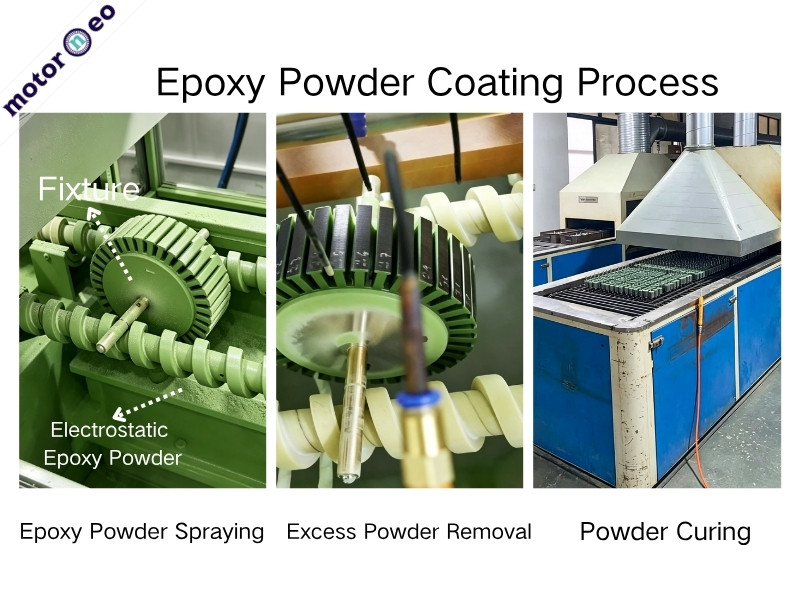
Epoxy coating for stator cores is usually based on powder coating, such as electrostatic powder coating or fluidized bed powder coating. In general, the process starts with cleaning, degreasing, and preheating the core. Epoxy powder is then applied to specified areas such as the slots, teeth, and end faces. Finally, the coating is cured to form an insulating layer.
Areas where coating is not allowed, such as the inner diameter, outer diameter, and mounting surfaces, need to be masked in advance.
Key Advantages
Slot fill factor can be simply understood as how much copper wire can fit inside the stator slot. The thicker the insulation layer, the more space it occupies, and the less space remains for the copper wire.
The main advantages of epoxy coating are its relatively thin coating, less space consumption, and strong adaptability to different structures. For narrow slots, deep slots, and special-shaped slots, epoxy coating is more likely to form continuous coverage than slot paper. It can also avoid some structural limitations that are difficult to achieve with injection molding. However, the coating thickness and coverage at the slot openings, tooth tips, and corner areas still need to be carefully controlled. If the coating is uniform, the adhesion is good, and the slot opening edges are properly treated, it can also help reduce the risk of scratching the magnet wire during winding.
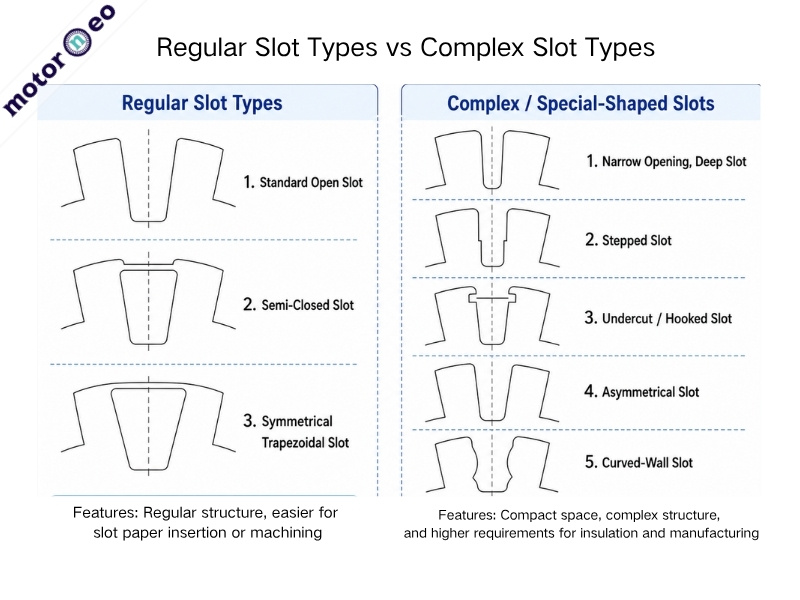
For example, in small high-speed motors or compact BLDC motor stators, the space inside the slot is already limited. If the insulation layer is too thick, it will affect the winding space and slot fill factor. Therefore, these projects pay more attention to coating thickness, coating uniformity, and coverage at edges and corners.
Process Limitations and Key Considerations
This process requires precise production control. If the coating is too thin, the withstand voltage may fail to meet the required standard; if it is too thick, it will reduce the available winding space. Edge areas such as slot openings and tooth tips are also prone to insufficient coating coverage, so they need to be carefully controlled.
In addition, if the coating adhesion is insufficient, peeling or delamination may occur after winding friction or long-term operating vibration. During production, the curing temperature, coating thickness, and masking process must be strictly controlled.
When a project enters the structural finalization and mass production stage, customers usually pay more attention to consistency, assembly positioning, and automated winding. In this case, an injection-molded insulation structure becomes a more advantageous option.
Injection Molding and Overmolding for Stator Core Insulation
The Difference Between Injection Molding and Overmolding
Injection molding refers to the forming process, while overmolding describes the finished structure in which plastic partially or fully covers the stator core. Many overmolded structures are produced by injection molding, but the two terms are not identical.
For project evaluation, the covered area, material, thickness, and effects on winding and assembly should be clearly defined.
Key Advantages
injection molding and overmolding provide good dimensional consistency and can integrate insulation, positioning, support, and winding guidance into one structure. They also reduce variations such as insulation displacement, wrinkles, and missed insertion, making them suitable for stable mass production and automated winding.
Engineering plastics such as PPS, LCP, PA, and PBT can provide heat resistance, vibration resistance, and mechanical support, although actual performance depends on the material grade and structural design.
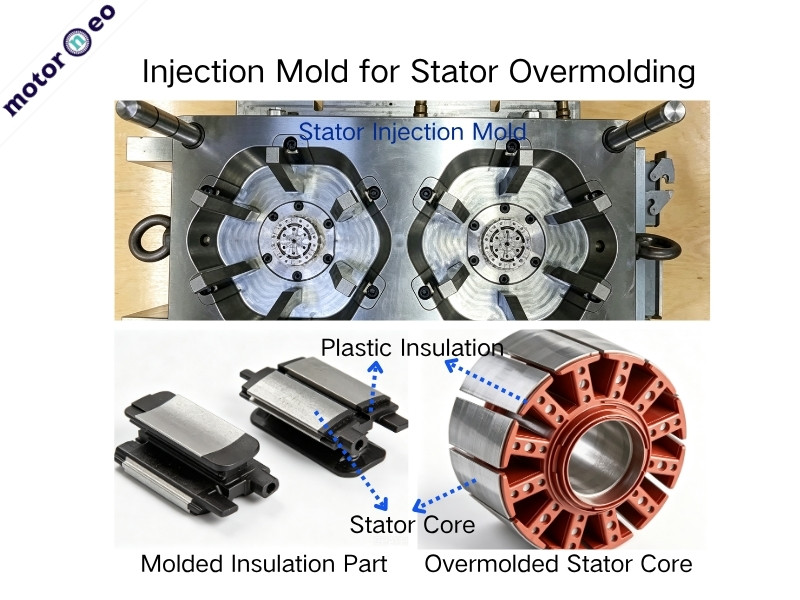
For stator projects with finalized structures and stable production volumes, injection molding and overmolding involve mold costs. However, the insulation structure, positioning dimensions, and winding consistency are easier to control, making this solution more suitable for the mass production stage.
Process Limitations
Injection molding and overmolding require dedicated molds, resulting in higher cost and longer lead times. They are less suitable for prototype iterations, and slot geometry or insulation thickness is difficult to change after design finalization. Their thicker plastic layer also requires advance evaluation of slot space and assembly clearance.
For conventional stators, slot paper remains a mature, economical, and easy-to-implement alternative.
Slot Paper for Stator Core Insulation: A Mature and Low-Cost Solution
Process Characteristics
Slot paper uses DMD, NMN, or aramid paper inserted manually or automatically into the stator slots. It suits prototypes and small- to medium-sized motors, but cutting size, insertion depth, end extension, and insertion consistency must be controlled to ensure winding and withstand-voltage performance.
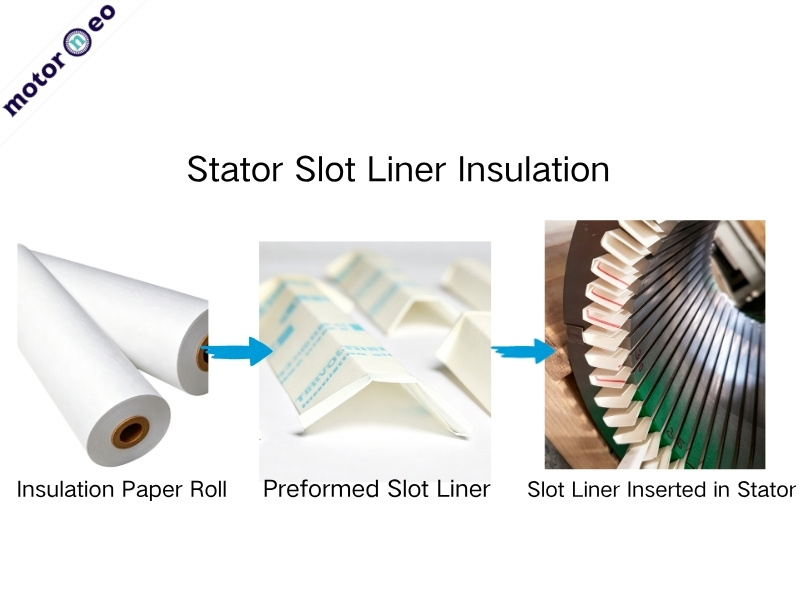
Key Advantages
Slot paper is a mature, low-cost solution that requires no molds or advanced equipment. It suits prototypes, small batches, and multi-specification production. With suitable material, thickness, and insertion quality, it can meet the insulation and withstand-voltage requirements of many conventional motors.
However, it is less suitable for narrow, deep, or special-shaped slots, where poor fitting or wrinkles may create insulation risks. Its consistency also depends on insertion accuracy.
Slot paper mainly protects the slot interior and provides less mechanical support than molded plastic. High-reliability applications may require varnish impregnation or end insulation, while heat resistance depends on the material grade.
Quick Selection Guide for Three Insulation Solutions
Quick Selection Guide for Three Insulation Solutions.
| Project Requirement Scenario | Suitable Insulation Solution |
| Cost-sensitive projects, regular slot shapes, small- to medium-batch production | Slot paper |
| Compact space, high slot fill factor, special-shaped slots | Epoxy coating |
| Finalized structure, high-volume automated mass production | Injection molding and overmolding |
| Fully automated high-speed winding production | Epoxy coating / injection molding and overmolding |
| High withstand voltage and high-reliability requirements under demanding operating conditions | Combined insulation solution with multiple processes |
For demanding operating conditions, multiple insulation methods may need to be combined. Stator core insulation is only one part of the motor insulation system and cannot replace magnet wire enamel or the overall winding insulation design.
Four Types of Information to Confirm Before Selection
Before finalizing the solution, confirm:
- Core structure: slot geometry, stack height, diameters, and assembly clearance.
- Insulation requirements: withstand voltage, temperature rating, thickness, adhesion, and environmental resistance.
- Subsequent processes: winding, impregnation or potting, end insulation, and assembly impact.
- Project stage and volume: prototypes prioritize flexibility and lead time; mass production prioritizes cost, yield, and consistency.
Slot paper suits regular slots and cost-sensitive projects; epoxy coating suits compact or complex slots; injection molding and overmolding suit finalized designs and stable mass production. The best choice balances slot space, electrical performance, manufacturability, consistency, and cost.
Motorneo provides custom manufacturing and processing services for stator and rotor cores. If you have a related project or sourcing requirement, please contact us to discuss your specifications.