
When people think of FPV drones, high-speed racing drones often come to mind first. However, FPV motor design requirements vary greatly by application, from filmmaking to long-range flight.
Different missions place different demands on speed, stability, and endurance.As a result, they also require different motor solutions.
Why do racing FPV drones need high-KV, fast-response motors, while long-range FPV focuses more on efficiency?
The answer lies in motor design.
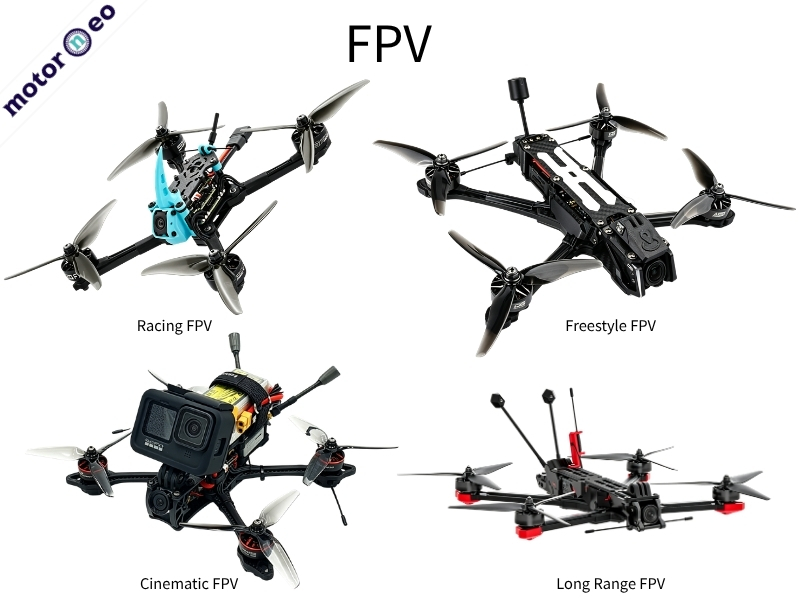
What Is an FPV Drone?
FPV (First Person View) provides pilots with a real-time view from the drone’s perspective. Compared with conventional camera drones, FPV relies more on direct pilot control. Therefore, fast motor response plays a more important role in flight performance.
A complete FPV propulsion system usually includes:
- Brushless DC motor (BLDC Motor);
- Electronic Speed Controller (ESC);
- Flight controller;
- Battery;
- Propeller.
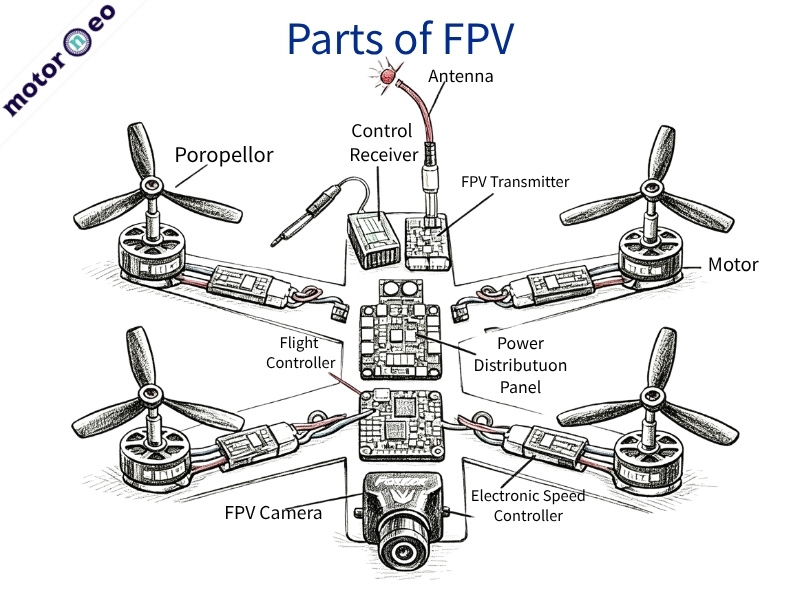
The motor is one of the key components that determines flight performance.
For FPV drones, the motor must provide enough thrust and respond quickly. Every turn, flip, and acceleration depends on rapid motor speed changes.
Therefore, FPV motor design must consider:
- Speed;
- Torque;
- Efficiency;
- Weight;
- Heat dissipation.
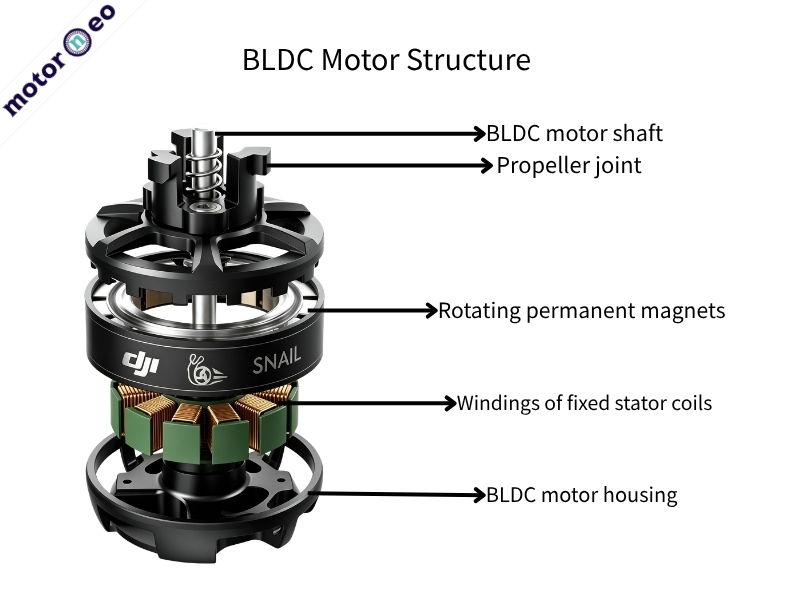
How Do FPV Motor Design Requirements Change by Application?
Although FPV drones serve different purposes, BLDC motors remain their core power source.
Different applications directly affect motor structure, starting with stator size.
The stator determines winding space and magnetic circuit dimensions, strongly affecting motor torque and power output. A larger stator can usually hold more copper, increasing output but also adding weight.
Next comes the motor core design.
FPV motors often run at high speeds, so the core faces higher-frequency magnetic field changes. Poor material or structural design increases iron loss and temperature rise.
Therefore, high-performance FPV motors usually require optimization of:
Electrical steel;
Lamination thickness;
Magnetic circuit design.
Finally, heat dissipation must be considered.
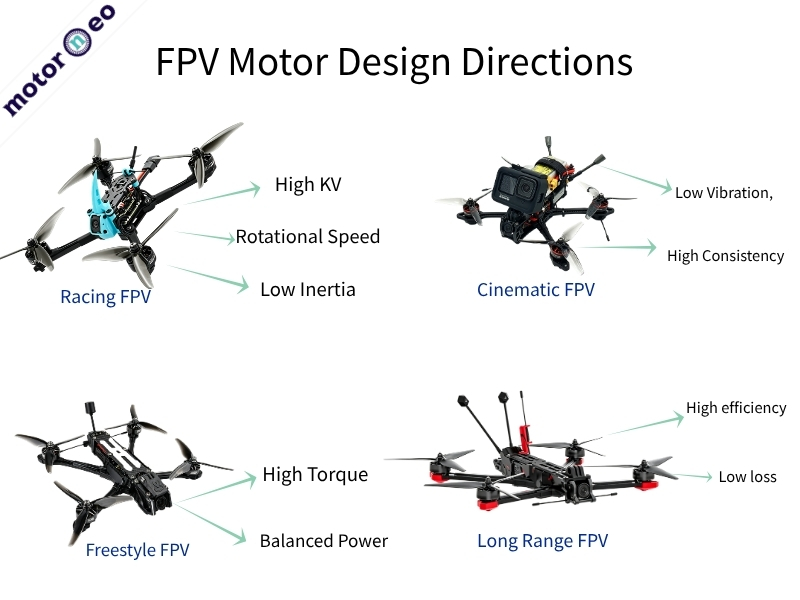
Different FPV types operate under different conditions. Racing FPV needs short bursts of high power. Cinematic FPV requires stable operation. Therefore, motor design must match the actual application.
Racing FPV: High-Speed Motors
The goal of Racing FPV is clear: complete the flight course as fast as possible.
These drones are mainly used for racing or high-speed flying. They frequently require:
Rapid acceleration;
Sharp turns;
Instant attitude changes.
Therefore, Racing FPV places a strong emphasis on motor response speed.
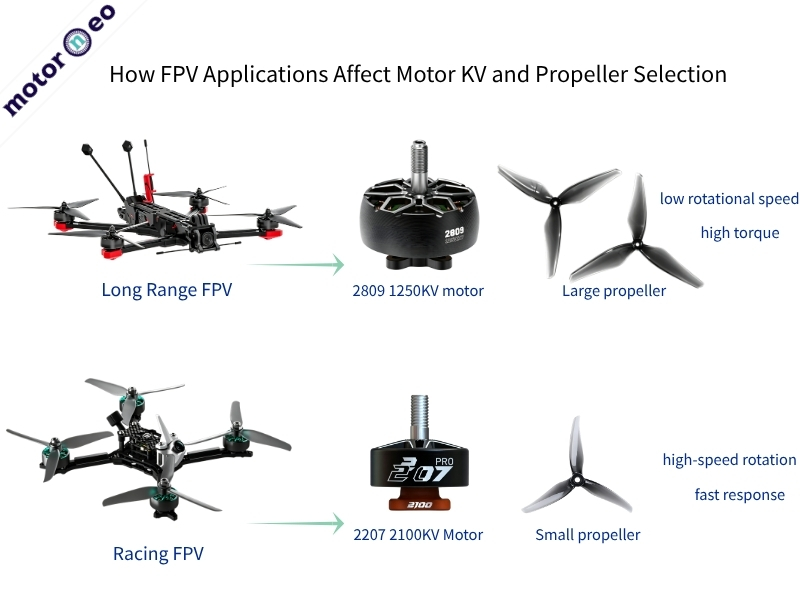
Racing FPV usually uses high-KV brushless motors. KV indicates the theoretical RPM gained per volt. A higher KV allows the motor to reach higher speeds more easily. This helps the motor change thrust quickly. For frequent acceleration, sharp turns, and attitude changes, fast response matters more than long-term efficiency.
For a typical 5-inch FPV drone, 2207 and 2306 motors are often paired with 5-inch propellers. KV selection also depends on whether the system uses a 4S or 6S battery.
However, a higher KV does not simply mean better performance.
Higher motor speed usually also means:
Higher current demand;
Greater temperature rise;
Higher mechanical load.
Therefore, racing motors must balance speed and reliability.
Besides KV, rotor inertia also affects racing performance. A heavier rotor takes longer to change speed. This can slow the drone’s attitude response.
Therefore, high-performance racing motors often optimize the rotor structure. They reduce rotational inertia while maintaining sufficient strength, allowing faster flight control response.
Freestyle FPV: Torque and Balance
Racing FPV focuses on completing the course as fast as possible. Freestyle FPV focuses more on control and power reserve.
Racing FPV aims for speed, while Freestyle FPV focuses more on aerial maneuvers, such as:
Flips;
Rolls;
Continuous aerial tricks.
These maneuvers require not only speed but also stable power output.
During continuous flips, the motor must change output quickly while maintaining enough torque for precise attitude control.
Therefore, Freestyle FPV motors must balance speed, torque, and control response.
Motors of the same size can still deliver different performance due to stator size, winding design, and magnet configuration.
This is why FPV motor design should match the application rather than simply compare power ratings.
Cinematic FPV: Stability and Low Vibration
In recent years, Cinematic FPV has become an important tool for filmmaking.
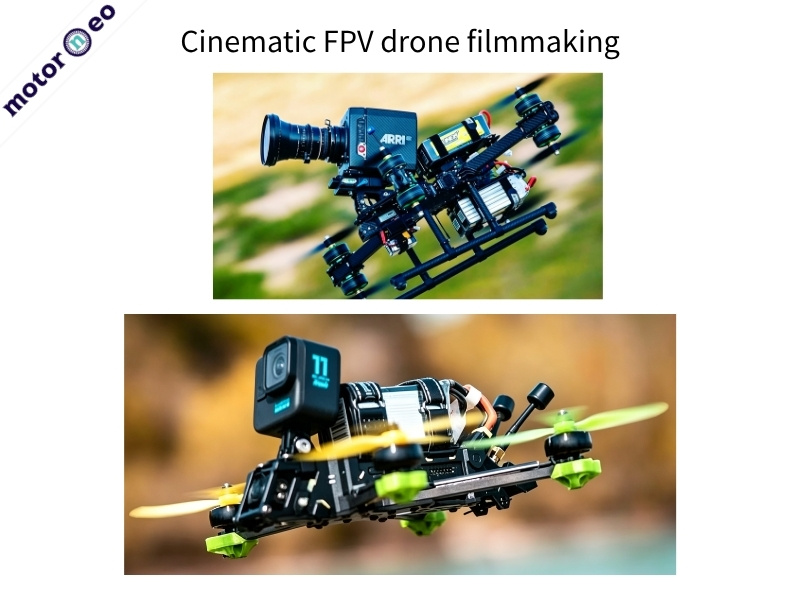
Compared with Racing FPV, Cinematic FPV focuses more on image stability than speed.
For car tracking, building fly-throughs, or aerial filming, FPV drones must move fast while keeping footage stable. Aggressive motor output can increase vibration and make flight control and image stabilization more difficult.
Therefore, Cinematic FPV usually avoids extremely high-speed motor setups. It focuses more on efficiency and low-vibration performance.
From a motor design perspective, stability depends not only on flight control algorithms but also on manufacturing precision.
For example:
Rotor balance;
Stator machining accuracy;
Winding consistency;
Magnet installation accuracy.
All these factors affect motor operation.
For Cinematic FPV, stable motor operation is often more important than short bursts of higher power.
Long Range FPV: Efficiency and Endurance
Long Range FPV has a very different design goal from Racing FPV.
It does not pursue extreme speed. Instead, it aims to fly farther with limited battery capacity.
Therefore, Long Range FPV focuses more on:
Motor efficiency;
Energy utilization;
Long-term operating stability.
To extend flight time, these drones usually use more efficient power systems. They match suitable KV ratings, batteries, and propeller sizes.
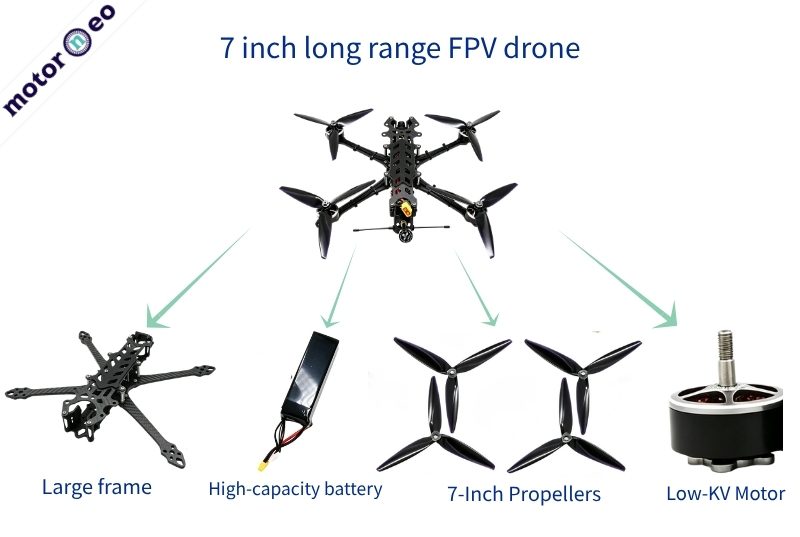
From the motor perspective, efficiency depends not only on speed but also on internal structure.
For example:
- Stator size affects output capability;
- Winding design affects copper loss;
- Core material affects iron loss;
- Heat dissipation affects long-term operation.
For long-range flight, reducing losses matters more than short bursts of power. Motor design should optimize KV, stator size, windings, core material, and cooling.
Choosing the Right FPV Motor
FPV drones have expanded from racing and recreation into filmmaking, long-range flight, and industrial applications.
No single power system is best for every type of FPV drone.
Racing FPV focuses on speed and response;
Freestyle FPV focuses on power and balance;
Cinematic FPV focuses on stability and low vibration;
Long Range FPV focuses on efficiency and endurance;
Therefore, FPV motor design requirements go far beyond simply increasing power.
For future FPV motors, which will matter most: speed, endurance, or lower weight?